
CategoriesPanchkula Extension 2

What are Deen Dayal Awas Yojna Plots in Panchkula Extension-2?

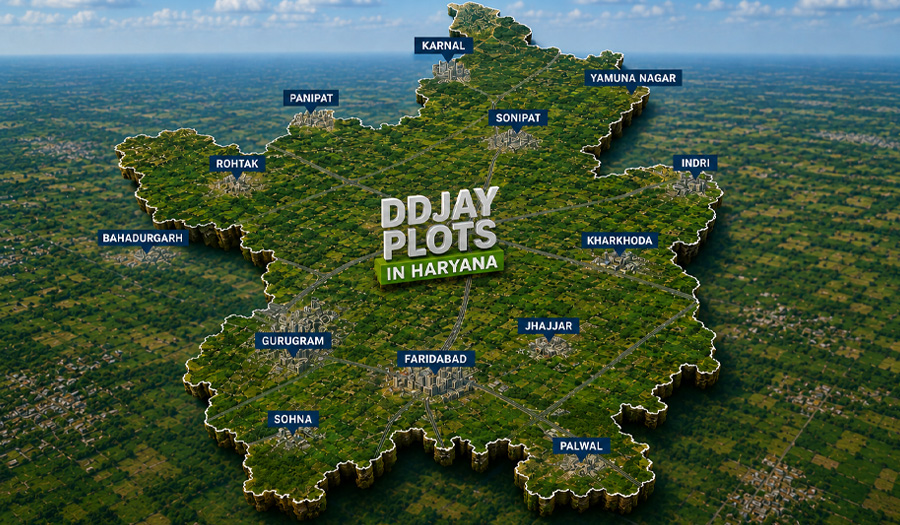
Deen Dayal Jan Awas Yojana (DDJAY) is a Haryana government policy aimed at promoting planned, affordable plotted residential development. Under this policy, licensed developers develop residential plotted colonies with planned roads, open spaces, infrastructure and other approved amenities, instead of buyers purchasing unplanned or standalone agricultural land.

In Panchkula Extension-2, DDJAY plots refer to residential plots developed under this framework and approved by the relevant Haryana planning authorities. Buyers purchase a designated residential plot within the approved colony and can construct a home according to the applicable development and building regulations.

For a buyer, the key difference is that a DDJAY plot is part of a licensed and planned residential development, with the colony’s layout, roads, parks/open spaces and infrastructure subject to the applicable approvals and regulations. However, the exact specifications, approvals, plot sizes, development status and construction conditions can vary from one project to another, so these should be verified from the project’s official approvals and documents before purchase.

DDJAY is an affordable plotted housing policy, but it is important not to interpret “affordable” as “plots only for poor people.

The official Haryana policy itself is titled “Affordable Plotted Housing Policy 2016”, and its stated objective is to encourage high-density plotted colonies where smaller plots are made available through a liberal policy framework.
So why is it called “Deen Dayal Jan Awas Yojana”?

The name is essentially the name given to the Haryana government’s policy. It is named after Deen Dayal Upadhyaya, while Jan Awas Yojana broadly conveys the idea of a housing initiative for the public. It does not mean: A housing scheme exclusively for poor people.Rather, the policy was created to facilitate affordable, planned plotted housing and increase the availability of smaller residential plots. The policy framework is about how developers can develop and license these plotted colonies, rather than being a direct government subsidy where only people below a particular income can buy a plot.

DDJAY = Government policy + licensed plotted development + relatively smaller plots + planned infrastructure + affordable-plotted-housing objective.

With the growing demand for affordable residential plots in Haryana, the Deen Dayal Jan Awas Yojana (DDJAY) has emerged as a significant option for homebuyers and property investors seeking planned plotted developments. Several projects are also registered under RERA, providing greater transparency, regulatory oversight, and confidence to buyers.

The policy encourages private developers to establish planned plotted residential colonies, typically ranging from 5 to 15 acres, with essential infrastructure and civic amenities. Depending on the approved project plan, these developments may include well-planned roads, water supply, electricity, drainage, parks, and other supporting infrastructure, offering buyers a more structured alternative to purchasing an isolated or unplanned plot.
Deen Dayal Jan Awas Yojana Plots Benefits

Gated Townships

A secure gated community ensures complete safety, and peace of mind.

Plot Size

Attractive Plot size ranging from 90-180 Sq. Yds. (75-150 Sq. Meter)

Commercial

Provision for Commercial spaces within society for convenience of residents.

Kids Play Area

Beautifully designed kids’ play area offers joyful and safe recreation space.

Open Air Gym

Open-air gym keeps residents healthy, fit, and active throughout the year.

Street Lights

Elegant streetlight poles ensuring brightness and safety at night.

Independent Floors

Build stylish, independent floors as per personal preference.

Wide Internal Roads

30 ft. (9 Meter) wide Internal roads for openness.

STP

Rain Water Harvesting System (RWHS) and Sewage Treatment Plant (STP).

CategoriesPanchkula Extension 2

The 10-Minute Plot Inspection: What Should You Look at When You Reach the Site?

The 10-Minute Plot Inspection: What Should You Look at When You Reach the Site?

When you visit a plot in Panchkula Extension-2, don’t get impressed only by the road, surrounding development, or what the dealer tells you. Spend just 10 minutes walking around the site and looking at a few basic things yourself.

You don’t need to be a property expert. You simply need to know what to look at and what questions to ask.

#1. First, check the actual approach road

Before looking at the plot itself, see how you actually reach the site.

Ask yourself:

– Is the approach road properly accessible?
– What is the condition of the road?
– Is the road wide enough for cars and other vehicles?
– Is there any narrow stretch or difficult turn before reaching the site?
– Does the road shown to you on the map actually exist on the ground?

For Panchkula Extension-2, this is particularly important because the experience can be very different on paper versus what you see when you actually visit the location.

# 2. Don’t just look at the plot — look around it

Stand at the plot and spend a minute looking in all four directions.

Check:

– What is immediately next to the plot?
– Are there houses or other plots nearby?
– Is the surrounding area already developing?
– Are there vacant patches around it?
– Is there any drain, low-lying area or other feature nearby that you should know about?

A plot doesn’t exist in isolation. The surroundings will eventually become part of your everyday experience if you build a house there.

# 3. Look at the road level and plot level

This is something a normal buyer can easily miss.

Stand on the road and then look at the plot.

Does the plot appear significantly lower or higher than the road?

If it is substantially lower, ask what arrangements are planned for filling and drainage.

You don’t need to calculate anything yourself. Just notice the difference and ask the question before buying.

# 4. Check drainage and water flow

If you visit after rain, this becomes even easier to understand.

Look for signs such as:

– Standing water
– Muddy or waterlogged areas
– Water flowing towards the plot
– Existing drains
– The direction in which rainwater appears to move

You don’t have to be an engineer. Just ask:

“When it rains heavily, where does the water go?”

That’s a very simple question — and an important one.

# 5. Check electricity and basic infrastructure

Look around the surrounding area.

Can you see:

– Electricity poles?
– Existing connections?
– Water infrastructure?
– Street lighting?
– Roads being developed?
– Other basic services?

Don’t assume that something will be available simply because it is mentioned in a brochure. Ask what is already available and what is proposed.

# 6. Check the plot dimensions yourself

If you’re buying a particular plot, don’t rely only on the number written in the property advertisement.

Ask for the plot dimensions and compare them with what you see on site.

For example, if you’re being shown a 100-gaj plot, ask:

“What are the actual dimensions of this plot?”

Also check where the plot boundaries are marked.

For a serious purchase, the dimensions and documents should ultimately be verified through the appropriate property/legal professionals.

# 7. Look at the surrounding development

This is particularly relevant when you’re considering

Panchkula Extension-2 as a developing area.

Don’t only ask, “What is coming here?”

Also look at:

“What is already here?”

Existing roads, occupied houses, nearby development, access routes and everyday activity can give you a much better understanding of the location than a future-project list alone.

# 8. Ask one very important question: “Can I come here again?”

If you’re seriously considering the plot, don’t feel pressured to make your decision during the first visit.

Take the location details, documents and plot information with you.

Visit again if necessary — preferably at a different time of day.

A second visit can help you notice things that you completely missed during the first visit.

# Your 10-minute checklist

Before leaving the site, simply ask yourself:

✓ Can I easily reach the plot?
✓ Is the road actually as described?
✓ What is developing around the plot?
✓ Is the plot level with the road?
✓ Where will rainwater go?
✓ What infrastructure is already available?
✓ Are the plot dimensions clear?
✓ Have I seen the actual plot boundaries?
✓ Have I asked what is existing vs what is only proposed?
✓ Have I checked the documents before making a decision?

# One simple rule for Panchkula Extension-2

Don’t buy a plot only after seeing the brochure. See the location, understand the surroundings, ask questions, and then verify the documents.

Ten minutes at the site can help you ask the right questions before you commit your money.

PANCHKULA EXTENSION – ii

Why to choose Panchkula Extension-ii

If someone is planning to buy a plot in Panchkula Extension-2, the biggest advantage lies in its long-term growth potential. As one of the largest planned urban extensions of Panchkula, the area is witnessing continuous residential development, expanding road infrastructure, and increasing commercial activity. Its strategic connectivity to Chandigarh, Zirakpur, and NH-7, along with ongoing government support for civic infrastructure, is expected to drive both demand and property appreciation in the coming years. With comparatively affordable land prices today and significant scope for future development, Panchkula Extension-2 offers an excellent opportunity for investors seeking strong long-term capital growth.
24x7 Support

Get in touch

phone / Whatsapp

+(91) 9996098408

email

info@panchkulaextension2.com
Disclaimer: This is an independent informational website and is not the official website of Panchkula Extension-2 or any government authority, development agency, or affiliated organization. This website is meant only for information purposes.
Call: 9996098408